10 min
Munch Team
10 min
Munch Team
Social Media Ad Design That Converts
Social Media Ad Design That Converts
With brands vying for consumer attention at all hours of the day, it’s easy to see how a scroll-past post may not be remembered at all. So what makes an ad campaign great enough to stop someone mid-scroll? The key is a thoughtful and strategic approach to social media ad design. A great ad isn’t just about graphics, but rather how you use psychology, storytelling, proper placement and correct timing to encourage action.
A great campaign doesn't happen by chance. The most successful campaigns are carefully planned, consistently creative, and continually optimized. When a brand has a well-defined plan in place for its social content, the firm can expect results in terms of increased engagement, stronger visibility, and increased measurable growth.
This article will show how to elevate your brand's advertising through effective planning, strategic creative direction, and the right tools.
Understanding the Power of Visual Strategy
A great ad isn’t simply aesthetically pleasing—it communicates a message clearly and inspires users to take a specific step. That is the foundation of high-performing social media ad design. Whether the goal is leads, sales, or awareness, the visuals and message must work hand in hand.
Effective ad creative focuses on:
Strong headlines that speak directly to the audience’s needs
Clear visuals that represent the brand identity
Consistent design language across different platforms
A powerful call to action that guides the next step
Companies that regularly create material with a planned purpose gain increased engagement and conversion rates compared with those who do not have as strong of an overall plan for their posts. The top companies utilize various tools to maintain a solid structure to the material created; one of which is to use a social media content calendar to have a cohesive and organized approach for each post instead of random thoughts or ideas.
Planning and Timing for Maximum Visibility
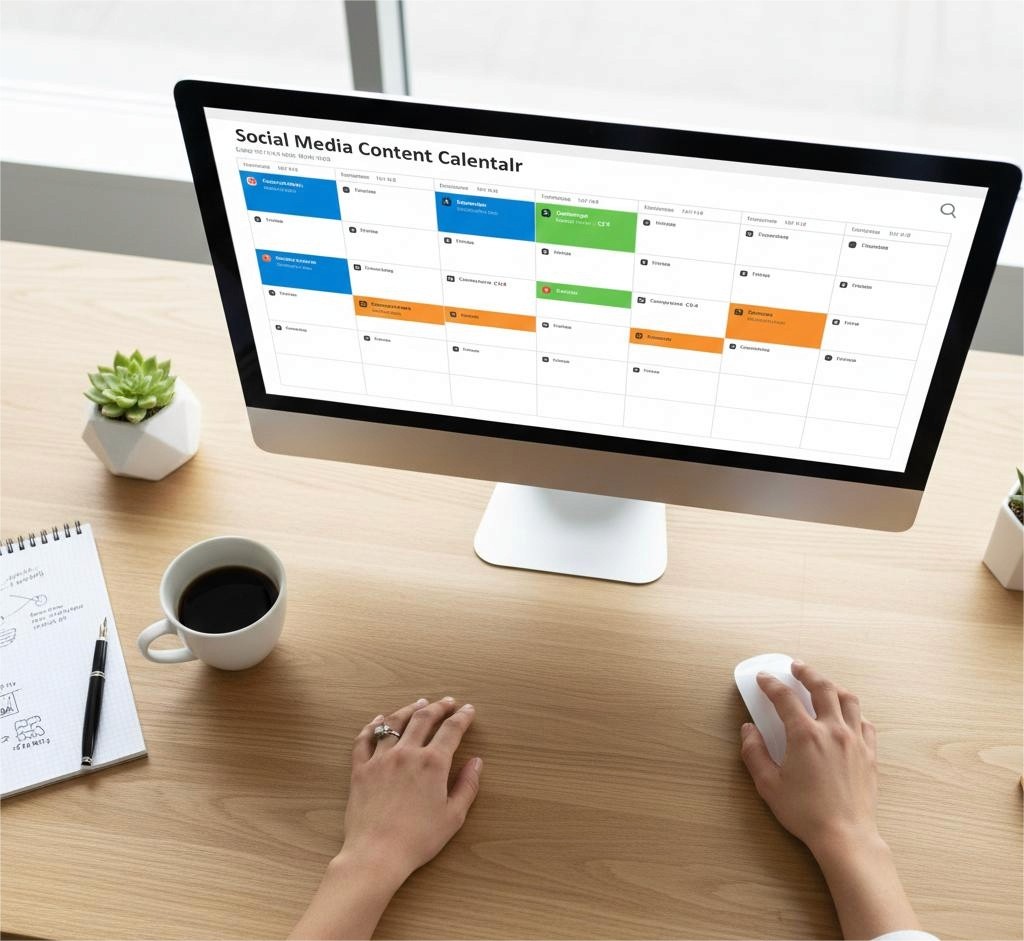
While creative design is essential in producing compelling content, the best creative design won't gain traction without appropriate timing of the post. Posting content necessarily to gain engagement typically does not lead to developing meaningful engagement. Therefore, many companies have developed social media marketing calendars to help them plan out their campaigns in advance and schedule posts across platforms, promotional events, and holiday opportunities.
In addition to planning, consistency plays an important role. Having a structured (consistent) social media posting schedule can help minimize the 'gaps' in time between posts where consumers have a lack of visibility and engagement with a company or brand. By providing consumers with content consistently at their peak engagement windows (morning/evening), companies can maximize the audience reach of their content based on the posting time and how consumers behave based on their industry.
Many businesses are utilizing modern-day automated tools to assist them in developing content and scheduling, tracking, and optimizing their content performance to increase the efficiency of their marketing and to better organize and facilitate the process of developing and publishing content.
Tools That Make Scaling Content Easier
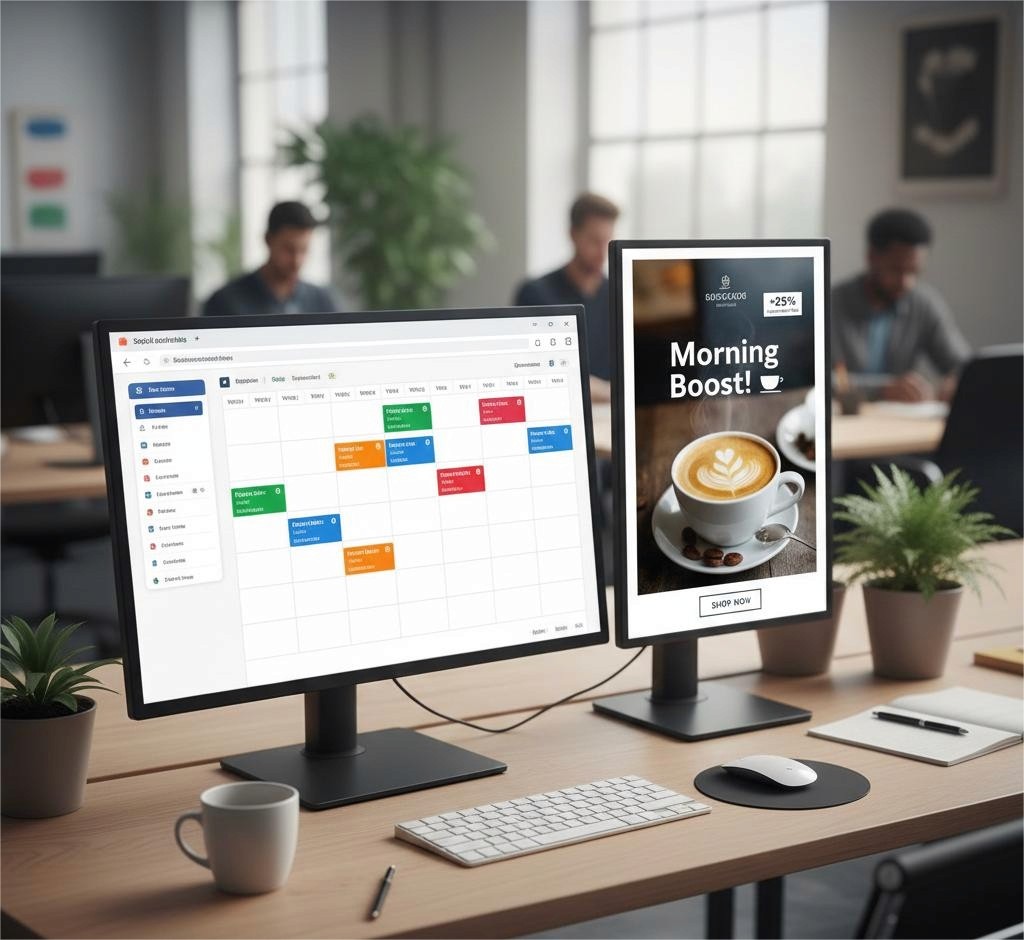
Managing content creation and publishing can be overwhelming without the right technology. Fortunately, today’s platforms make it easier than ever to design, schedule, and automate social media campaigns.
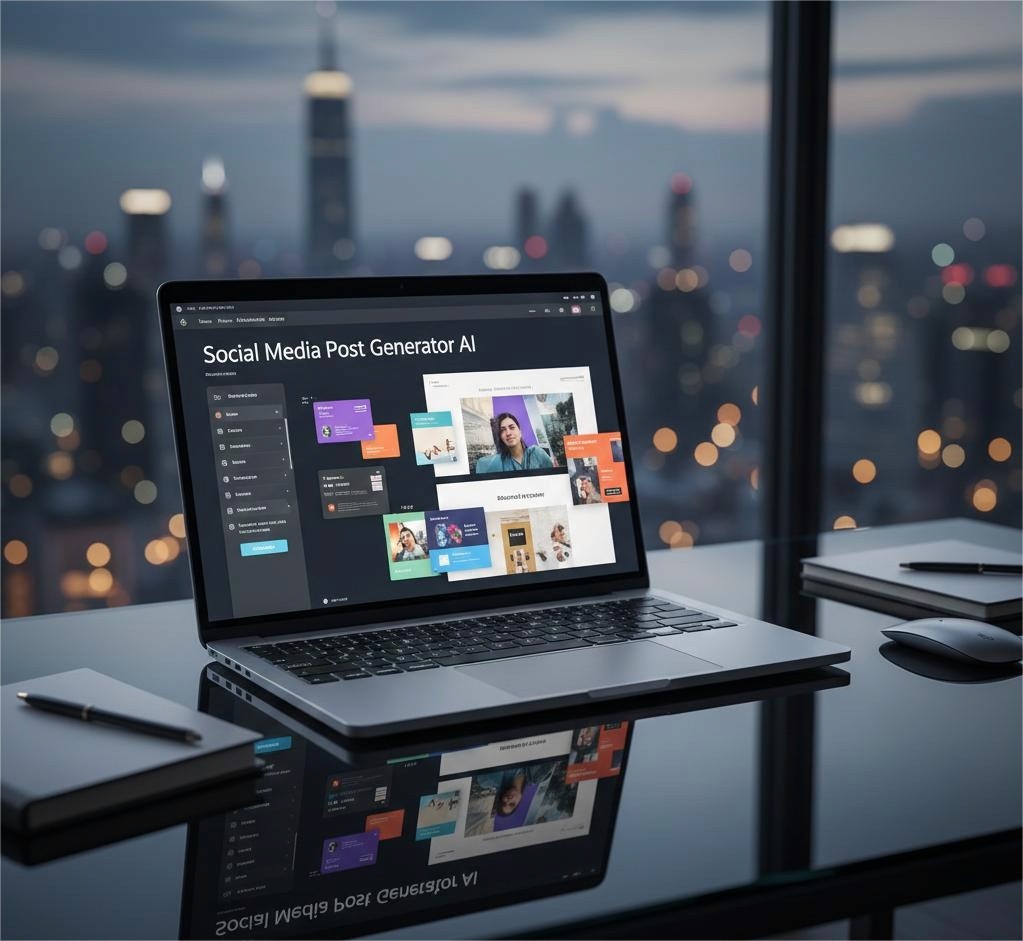
With the use of social media post generator AI, social media post caption ideas can be rapidly generated as well as varieties of post formatting and structural content themes that would take significantly longer if produced by hand. Social media growth tools provide analytical data on content style types that resonate most with the audience.
The result of these tools is increased efficiency by decreasing the number of repetitive tasks, allowing the creative team to concentrate on the strategic development and not be under continual pressure to produce content.
To show how these components work together to achieve advertising success, I have created a simple comparison table below:
Tool Category | Primary Purpose | Example Benefits |
Social media growth tools | Optimization & analytics | Tracks performance and improves decision-making |
Social media post generator ai | Content creation support | Speeds up idea generation and copywriting |
Social media marketing calendar | Long-term planning | Keeps campaigns aligned and coordinated |
Social media posting schedule | Publishing consistency | Ensures visibility and engagement growth |

Creativity, Psychology & Performance Data
Strong advertising blends creativity with performance insight. Design choices like color, layout, typography, and imagery influence behavior. People react emotionally first and logically second, so campaigns that connect with emotion outperform purely informational ones.
At the same time, data cannot be ignored. Brands need to test variations of headlines, formats, calls-to-action, and visual style to see what resonates. A/B testing, especially within paid promotion campaigns, is essential.
For businesses that want support from professionals, creative studios like Munch Studio specialize in helping brands with visual identity, ad design, and campaign structure. Their work demonstrates how creative guidance plus strategic planning translates to measurable results.
Bringing It All Together — Turning Creativity Into Conversions
In developing successful campaigns, brands need to put together all three of the following key components: best messaging, eye-catching design, and well-organized workflow. Systematic design with help from tools like a social media content calendar, an automated social media posting schedule, and additional technology for enhancement like social media growth tools or a social media post generator AI allows for easy scaling for brands.
Successful digital advertisers have taken a systematic approach to creativity, including visual refinement, data analysis, competitor studies, and trend adaptation, and they maintain successful, high-quality deliverables while retaining the integrity of their brand.
Conclusion
Success on a digital platform requires much more than a nice-looking image. In addition to the correct layout of the image, a successful digital platform requires alignment between a company's creative concepts and its goals, as well as the use of the right tools to implement these concepts efficiently. Therefore, companies that view social media ad design as part of an overall business strategy rather than a single isolated task are more likely to experience higher levels of engagement, conversion rates and brand loyalty.
A business that develops clear and intentional messaging, executes campaigns on a regular basis, and uses tools to create efficiencies in its advertising efforts can improve its capacity to connect with its target customers authentically.
With brands vying for consumer attention at all hours of the day, it’s easy to see how a scroll-past post may not be remembered at all. So what makes an ad campaign great enough to stop someone mid-scroll? The key is a thoughtful and strategic approach to social media ad design. A great ad isn’t just about graphics, but rather how you use psychology, storytelling, proper placement and correct timing to encourage action.
A great campaign doesn't happen by chance. The most successful campaigns are carefully planned, consistently creative, and continually optimized. When a brand has a well-defined plan in place for its social content, the firm can expect results in terms of increased engagement, stronger visibility, and increased measurable growth.
This article will show how to elevate your brand's advertising through effective planning, strategic creative direction, and the right tools.
Understanding the Power of Visual Strategy
A great ad isn’t simply aesthetically pleasing—it communicates a message clearly and inspires users to take a specific step. That is the foundation of high-performing social media ad design. Whether the goal is leads, sales, or awareness, the visuals and message must work hand in hand.
Effective ad creative focuses on:
Strong headlines that speak directly to the audience’s needs
Clear visuals that represent the brand identity
Consistent design language across different platforms
A powerful call to action that guides the next step
Companies that regularly create material with a planned purpose gain increased engagement and conversion rates compared with those who do not have as strong of an overall plan for their posts. The top companies utilize various tools to maintain a solid structure to the material created; one of which is to use a social media content calendar to have a cohesive and organized approach for each post instead of random thoughts or ideas.
Planning and Timing for Maximum Visibility
While creative design is essential in producing compelling content, the best creative design won't gain traction without appropriate timing of the post. Posting content necessarily to gain engagement typically does not lead to developing meaningful engagement. Therefore, many companies have developed social media marketing calendars to help them plan out their campaigns in advance and schedule posts across platforms, promotional events, and holiday opportunities.
In addition to planning, consistency plays an important role. Having a structured (consistent) social media posting schedule can help minimize the 'gaps' in time between posts where consumers have a lack of visibility and engagement with a company or brand. By providing consumers with content consistently at their peak engagement windows (morning/evening), companies can maximize the audience reach of their content based on the posting time and how consumers behave based on their industry.
Many businesses are utilizing modern-day automated tools to assist them in developing content and scheduling, tracking, and optimizing their content performance to increase the efficiency of their marketing and to better organize and facilitate the process of developing and publishing content.
Tools That Make Scaling Content Easier
Managing content creation and publishing can be overwhelming without the right technology. Fortunately, today’s platforms make it easier than ever to design, schedule, and automate social media campaigns.
With the use of social media post generator AI, social media post caption ideas can be rapidly generated as well as varieties of post formatting and structural content themes that would take significantly longer if produced by hand. Social media growth tools provide analytical data on content style types that resonate most with the audience.
The result of these tools is increased efficiency by decreasing the number of repetitive tasks, allowing the creative team to concentrate on the strategic development and not be under continual pressure to produce content.
To show how these components work together to achieve advertising success, I have created a simple comparison table below:
Tool Category | Primary Purpose | Example Benefits |
Social media growth tools | Optimization & analytics | Tracks performance and improves decision-making |
Social media post generator ai | Content creation support | Speeds up idea generation and copywriting |
Social media marketing calendar | Long-term planning | Keeps campaigns aligned and coordinated |
Social media posting schedule | Publishing consistency | Ensures visibility and engagement growth |
Creativity, Psychology & Performance Data
Strong advertising blends creativity with performance insight. Design choices like color, layout, typography, and imagery influence behavior. People react emotionally first and logically second, so campaigns that connect with emotion outperform purely informational ones.
At the same time, data cannot be ignored. Brands need to test variations of headlines, formats, calls-to-action, and visual style to see what resonates. A/B testing, especially within paid promotion campaigns, is essential.
For businesses that want support from professionals, creative studios like Munch Studio specialize in helping brands with visual identity, ad design, and campaign structure. Their work demonstrates how creative guidance plus strategic planning translates to measurable results.
Bringing It All Together — Turning Creativity Into Conversions
In developing successful campaigns, brands need to put together all three of the following key components: best messaging, eye-catching design, and well-organized workflow. Systematic design with help from tools like a social media content calendar, an automated social media posting schedule, and additional technology for enhancement like social media growth tools or a social media post generator AI allows for easy scaling for brands.
Successful digital advertisers have taken a systematic approach to creativity, including visual refinement, data analysis, competitor studies, and trend adaptation, and they maintain successful, high-quality deliverables while retaining the integrity of their brand.
Conclusion
Success on a digital platform requires much more than a nice-looking image. In addition to the correct layout of the image, a successful digital platform requires alignment between a company's creative concepts and its goals, as well as the use of the right tools to implement these concepts efficiently. Therefore, companies that view social media ad design as part of an overall business strategy rather than a single isolated task are more likely to experience higher levels of engagement, conversion rates and brand loyalty.
A business that develops clear and intentional messaging, executes campaigns on a regular basis, and uses tools to create efficiencies in its advertising efforts can improve its capacity to connect with its target customers authentically.